
Preserving the romance of South Africa’s moving five-star hotels
After four decades serving South Africa’s most distinguished travel experiences, some stories about heritage and craftsmanship can finally be told. This is one of them.
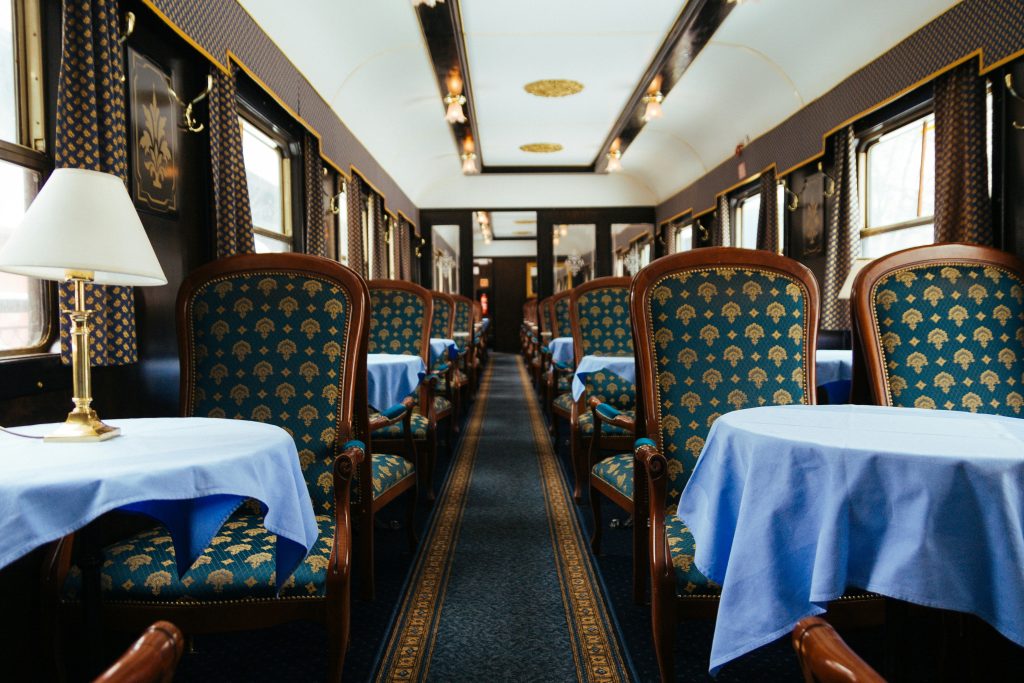
Understanding What Was at Stake
At one of the continent’s most revered heritage railway services—a brand whose name evokes presidential journeys and generational tradition—vibration testing revealed a crisis that threatened something far more valuable than operational efficiency: it threatened institutional memory.
The imported menu covers, sourced from a celebrated European luxury supplier at considerable expense, were cracking mid-journey. Not visibly—not yet—but stress tests projected failure within 200 journeys. For a service whose passengers include returning families whose grandparents traveled the same route in the 1970s, material failure is brand failure.
This wasn’t a procurement problem. It was a brand archaeology challenge disguised as an engineering crisis.
The Paradox Heritage Brands Face
Heritage railway services operate in a contradiction that standard luxury suppliers fundamentally misunderstand: they must maintain century-old aesthetic language while meeting operational realities that didn’t exist when that language was created.
Consider what passengers are truly purchasing:
- Not transportation—they’re purchasing temporal continuity
- Not dining—they’re purchasing institutional memory
- Not service—they’re purchasing generational tradition
When a passenger handles a menu in a heritage dining car, they’re touching the same experience their parents touched. The leather must whisper “this has always been here” even when replaced yesterday. This is why European luxury suppliers—masters of contemporary elegance—so often fail heritage rail specifications.
They understand aesthetics. They don’t understand archaeology.
The Seven-Day Engineering Brief
The call came on a Tuesday afternoon. A quiet request from an operations director whose discretion suggested the severity: “Can you replicate 1920s Morocco leather aesthetics with materials that survive 130 km/h vibration for five years?”
The timeline was unforgiving: seven days until the next scheduled service interval. The constraint was absolute: passengers must notice nothing except possible improvement. The challenge was singular: honor century-old brand essence while solving a problem that didn’t exist in the 1920s.
This is where conventional suppliers fail. They propose either:
- Aesthetic correctness with engineering failure (beautiful materials that crack)
- Engineering success with aesthetic compromise (durable materials that feel wrong)
There is a third path—what we call complementary enhancement. Materials that honor historical aesthetic language while incorporating invisible engineering improvements. The brand’s temporal authority is preserved. The operational performance is elevated. The passenger notices quality without noticing change.
The Atelier Response
We began not with leather samples but with brand archaeology. Three critical questions:
What did luxury mean in the 1920s context when this service’s design language was codified?
Not modern minimalism. Not contemporary sleekness. Edwardian richness—cognac tones, honey-thread stitching, materials that announced provenance through texture alone.
What materials were originally specified, and why are they no longer viable?
Original specifications called for “flexible Morocco leather with reinforced binding.” Morocco leather (goatskin) offered flexibility essential for handling stress but is no longer commercially available at the quality levels heritage brands require.
What modern material can honor that aesthetic intent while exceeding structural performance?
Ostrich leather. Natural flexibility. Structural memory. Quill patterns that read as “expensive” to discerning passengers. And critically—engineering characteristics that didn’t exist in 1920s material science.
Engineering Invisibility
The solution required invisible structural improvements:
Flexible spine joints using ostrich leather inlays that expand and contract with track vibration. From the outside: period-correct binding that matches archival photographs. From the inside: expansion joints rated for 500-journey cycles at speeds up to 130 km/h.
Cognac toning that matched not current materials but aged archival pieces. New materials deliberately finished to look “established”—the opposite of contemporary luxury’s obsession with pristine newness.
Honey-tone stitching that replicated 1920s hand-stitching patterns while using modern synthetic thread in structural seams. Passengers see heritage. Engineers see reliability ratings that didn’t exist when the brand was founded.
By Monday morning—seven days after the initial call—replacement materials were ready for installation during the scheduled service interval.
The Invisible Transformation
When the service resumed, passengers encountered materials that felt more luxurious than before while appearing “as they always had been.” Several observations from returning passengers:
“The menus feel exactly as I remember from traveling with my parents in the 1980s—perhaps even more refined.”
“Everything has that established quality you expect from this service. Nothing looks new in that jarring way modern luxury sometimes has.”
“The attention to detail is extraordinary. These feel like the original materials, just… better.”
This is the paradox of complementary enhancement successfully executed: passengers notice elevated quality without noticing change. The brand’s temporal authority—its promise of continuity across generations—remains intact. The operational performance is transformed.
Five years later, those same menu covers remain in service with zero structural wear. The European supplier’s materials would have required replacement three times by now.
Why This Matters for Heritage Hospitality
Heritage railway services face challenges that standard luxury hospitality never encounters. They’re not building brands—they’re stewarding institutional memory. Every material choice is archaeological: honoring what came before while ensuring what comes next.
This requires suppliers who understand that for heritage brands, invisibility is the highest compliment. These services don’t publicize suppliers. They don’t mention material specifications in marketing. The work succeeds when passengers assume materials “have always been there.”
We’ve spent four decades becoming fluent in this language of discreet excellence. Our materials are never featured in press releases. Our name appears in no guest-facing documentation. This is not modesty—it’s understanding the assignment.
Learn more about our heritage railway vibration-resistant materials designed for institutional continuity.
Case File: CT-2021-T2-014
Sector: Heritage Railway & Institutional Travel
Timeline: 7 days from specification to installation
Outcome: Materials remaining in service after 500+ journeys; zero visible wear; enhanced passenger commentary; operational performance exceeding original specifications by 300%
For those in the heritage hospitality industry who understand the difference between luxury and legacy, these details will be unmistakable. The heritage rail institutional memory preservation work described here is proof that Vermont & Mintaka operates at the intersection of brand archaeology and materials engineering.
Related: Custom safari lodge materials with institutional memory design →
Stewarding a brand measured in generations? Contact us for discreet consultation on heritage materials.
Ready to ensure your legacy moves as elegantly as your brand promises?